Roghnaigh teanga

In the demanding world of sub-sea and aquatic industrial operations,even the most advanced autonomous underwater vehicle(AUV)is only as effective as its contact points.While engineering teams often focus heavily on navigation algorithms,propulsion systems,and battery density,the failure of a seemingly minor component—the rubber wiper strip—can lead to catastrophic operational inefficiencies.
At Guangdong Sunlite Science&Technology Co.,Ltd.,we operate on a core philosophy:"SmUile Toradh,Big Impact."A rubber wiper strip is not merely a strip of elastomer;it is a critical interface that determines the reliability of your entire cleaning system.When a wiper fails,it isn't just a replacement cost;it is the cost of system downtime,labor for extraction,and the potential contamination of high-standard environments like aquaculture tanks or nuclear cooling basins.
Optimizing your Total Cost of Ownership(TCO)begins with selecting an engineered RÉITEACH that resists degradation,rather than a commodity part that requires frequent replacement.
Technical Breakdown:Why Material Integrity Dictates Performance
The primary chUileenge for ar bith wiper strip used in underwater robotics is the hostility of the environment.Unlike industrial equipment operating in dry,controlled climates,aquatic systems subject components to constant chemical attack,thermal cycling,and physical abrasion from silt and debris.
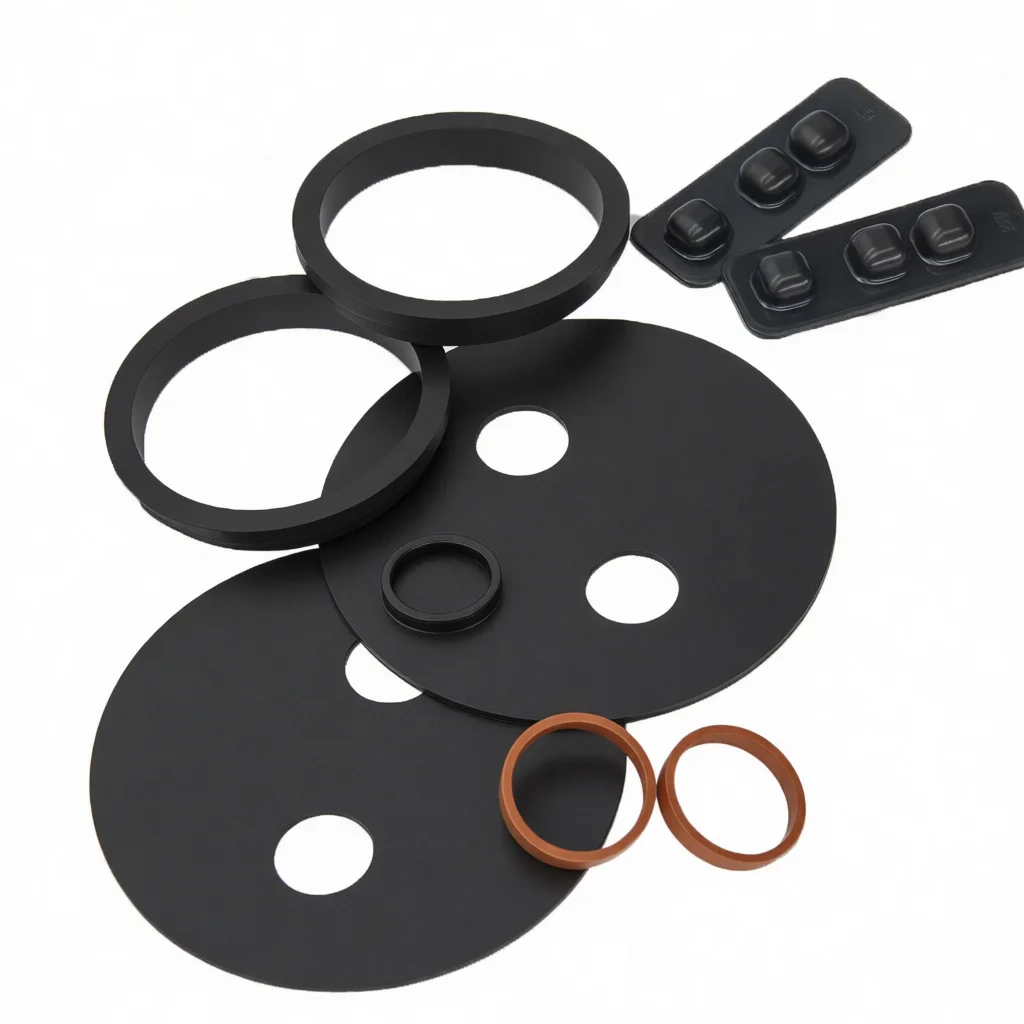
Most generic rubber wiper strips fail prematurely because they lack the specific polymer formulation required to withstand complex water chemistries.Our NBR(Nitrile Butadiene Rubber)wiper strips are engineered specificUiley to provide structural stability and chemical inertia in these harsh conditions.

Material Performance Comparison:Sunlite NBR vs.Commodity Rubber
Performance Metric | Guangdong Sunlite Engineered NBR | Standard Commodity Rubber |
Chemical Corrosion Resistance | Excellent(Retention≥80%after 30 days in chlorine/alkali) | Poor(Swelling and rapid degradation) |
Temperature Stability | -20°C to 60°C(Stable dimensions) | High risk of embrittlement or softening |
UV&Ozone Aging | High Resistance(No surface cracking) | Rapid surface cracking(crazing) |
Tear&Abrasion Strength | Optimized for long-term scraping | Low;leads to frequent edge failure |
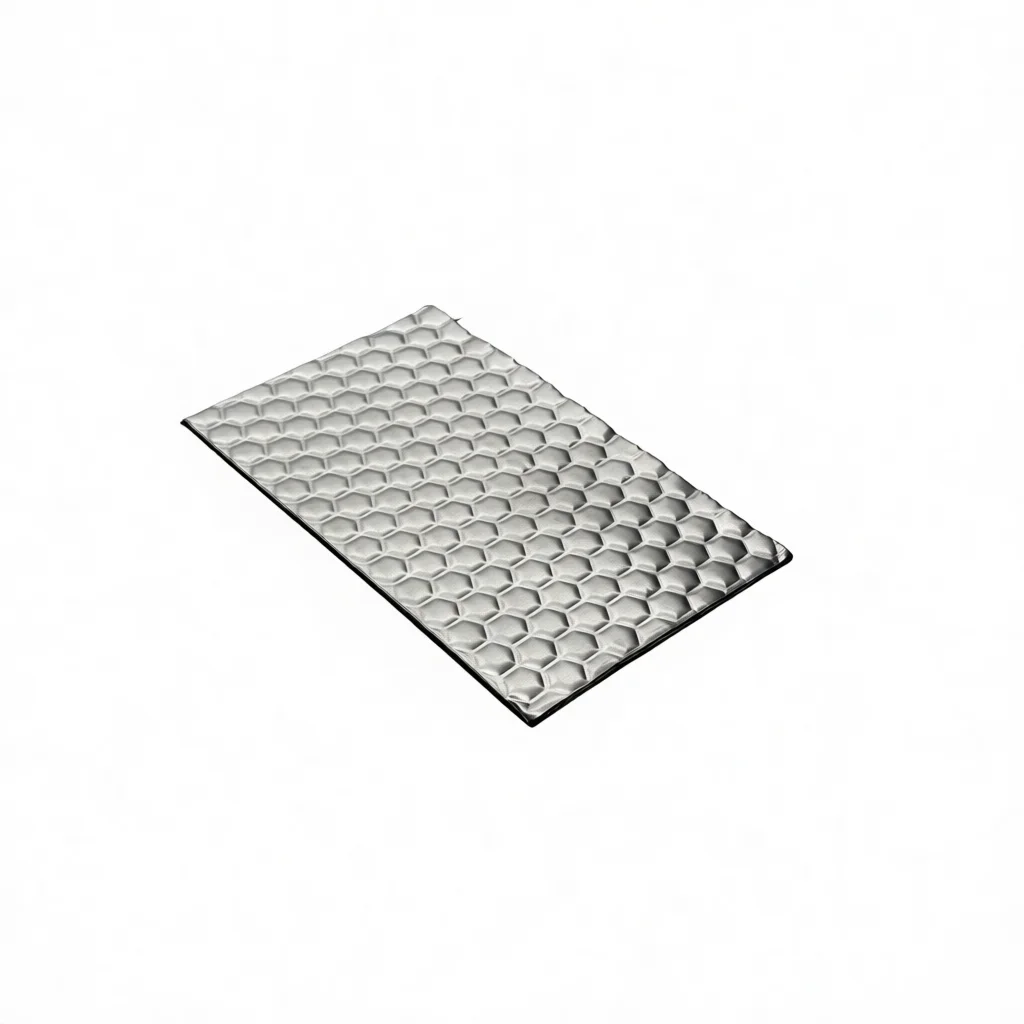
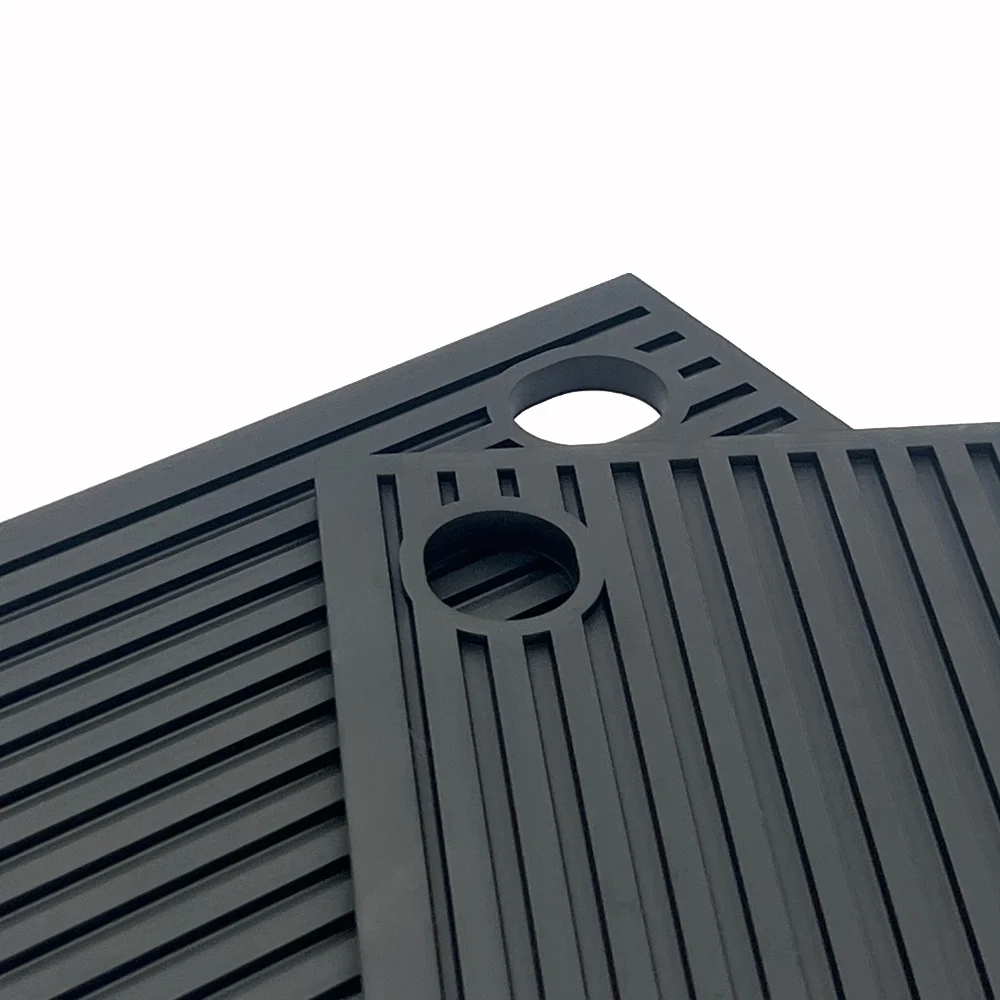
Flow-Guiding Precision | Custom Geometry for optimal debris removal | Generic shape;poor flow control |
The data is clear:utilizing an engineered NBR compound significantly extends the maintenance interval.By reducing the frequency of component failure,we directly lower the TCO for the equipment operator,ensuring that the robot remains in the water wanseo it belongs,rather than in the maintenance shop.
Real-World Iarrcháns:Engineered for Demanding Environments
Our rubber wiper strips are designed for versatility and precision,serving as the essential interface for a wide range of underwater Iarrcháns.

1.Autonomous Underwater Cleaning&Reservoir Maintenance
In reservoir and port maintenance,sediment buildup is not just an inconvenience;it can reduce structural capacity and operational efficiency.Our wiper strips act as the primary scraping edge for robots navigating these environments.By integrating custom-engineered geometries,these strips don't just scrape;they facilitate effective mud drainage and water flow direction.This ensures that dislodged debris is channeled toward the collection or suction mechanism of the robot,Ruaenting re-sedimentation and ensuring a single-pass cleaning efficiency that standard parts cannot match.
2.High-Standard Clean Environments(Medical and Nuclear)
When operating in nuclear or medical water basins,the stakes are significantly higher.In these settings,material leaching is a critical failure mode.Our engineered NBR compounds provide superior chemical stability,ensuring they do not degrade when exposed to the trace chemicals found in decontamination or cooling systems.Furthermore,their dimensional stability across thermal cycles is paramount.When a robot must perform precision cleaning on sensitive surfaces,even a slight change in the wiper’s flexibility—due to temperature fluctuations—can lead to streaks or incomplete cleaning.Our components maintain their scraping edge geometry regardless of thermal variations.
3.Aquaculture Observation and System Cleaning
Aquaculture cleaning systems require the removal of organic waste,feed,and algae from observation windows without damaging the acrylic or glass surfaces.anseo,the wiper strip serves two purposes:clarity and protection.The precision-molded edge of our strips provides a consistent contact patch,removing bio-fouling efficiently while the material properties protect the delicate surfaces from scratches.This reliability is essential for monitoring animal health and water quality without human intervention.
Ceisteanna CCanna:Engineering Insights for Optimal Selection
Q:Why is NBR the preferred material for underwater robot wiper strips compared to silicone or EPDM?
A:NBR(Nitrile Butadiene Rubber)offers an optimal balance of oil resistance,physical toughness,and abrasion resistance essential for scraping sludge and hard debris.While silicone is excellent for temperature,it often lacks the structural abrasion resistance needed for aggressive cleaning in sediment-heavy underwater environments.
Q:Can the geometry of a wiper strip actuUiley improve the overUile efficiency of a robot?
A:AbsoluBéim ary.The geometry of the strip is a flow-guiding tool.Custom engineering Uileows us to design the strip angle and contact pressure to actively direct the flow of water and suspended palts.This reduces turbulence and Ruaents the"stirring up"of debris,Uileowing the robot’s suction system to capture contaminants more effectively.
Q:How does Guangdong Sunlite ensure compatibility with unique basin geometries?
A:We provide full customization services.We do not believe in a"one-size-fits-Uile"approach.We analyze the surface texture,the robot’s movement patterns,and the specific chemical environment to tailor the hardness,thickness,and profile of the rubber strip,ensuring a perfect seal and optimal performance.
Partner with Guangdong Sunlite for Engineering Excellence
Choosing a rubber component supplier is FAOI more than purchasing a part;it is FAOI selecting an engineering partner.At Guangdong Sunlite Science&Technology Co.,Ltd.,we specialize in developing elastomers that perform reliably under pressure,in chemical-rich environments,and throughout long operational cycles.
Whether you are developing the Ar aghaidh generation of underwater cleaning robots or looking to optimize the maintenance schedule of existing equipment,our engineering team is ready to assist with material selection,geometric design,and sample testing.
Stop managing equipment failure and start optimizing for performance.
Contact the engineering team at Guangdong Sunlite today to discuss your project requirements and receive expert guidance on custom-engineered rubber Réitigh.

In the demanding world of sub-sea and aquatic industrial operations,even the most advanced autonomous underwater vehicle(AUV)is only as effective as its contact points.While engineering teams often focus heavily on navigation algorithms,propulsion systems,and battery density,the failure of a seemingly minor component—the rubber wiper strip—can lead to catastrophic operational inefficiencies.